The 5 Best Flooring Financing Options for Homeowners in 2026

The 5 Best Flooring Financing Options for Homeowners in 2026
Last updated: 2026-11-26
Home renovations often feel like a slow leak in your bank account. You might start with the cost of premium hardwood, but the price of professional installation usually adds a sting to the final bill. For many, the gap between a beautiful new floor and a lingering project comes down to how they choose to pay for it.
A sudden upgrade to luxury vinyl plank (LVP) or replacing worn-out wall-to-wall carpeting can escalate quickly. You have to account for subfloor preparation, transitions, baseboard adjustments, and labor. A project estimated at $3,000 can easily balloon to $4,500 once a contractor finds uneven joists or water damage lurking beneath the old surface.
Finding the right lender requires looking past the glossy showroom photos. You need to weigh interest rates, the speed of approval, and how a hard credit inquiry might affect your score. A high APR on a personal loan might seem manageable monthly, but over a five-year term, it could cost you thousands more than the floor itself is worth.
This list highlights the top contenders for those looking to turn their renovation dreams into a reality without breaking the bank.
- World of Floors
- Empire Today
- FastLendGo
- Acorn Finance
- Synchrony
How These Lenders Were Evaluated
The evaluation process focused on accessibility and speed. Since flooring projects often depend on contractor availability, getting a decision quickly is vital. If you have a three-day window where a crew can install, but your financing won’t be approved for two weeks, you might lose your spot and face significant delays.
Lenders were assessed on their ability to provide rapid approvals. We also looked for specialized terms, such as deferred interest, which can be a lifesaver for disciplined savers. Credit flexibility was another major pillar of this comparison. Some homeowners possess pristine credit scores, allowing them to hunt for the lowest possible APR.
Others are working to rebuild theirs after medical bills or high utilization. A lender that only caters to the elite is of little use to the broader market. We looked for a spectrum of options ranging from specialized credit cards to flexible personal loans.
We also looked at «use of funds» restrictions. Some lenders are strictly «point-of-sale,» meaning the money goes directly to the retailer. Others offer «unsecured personal loans,» which allow you to use the cash for anything. This includes buying materials yourself at a big-box store or paying a local handyman.
This distinction is crucial for homeowners who prefer the DIY route or want to shop around for the best material deals.
| Lender Name | Loan Amounts | Key Terms | Credit Requirements |
|---|---|---|---|
| World of Floors | See site | 0% interest until 2027* | Approved credit required |
| Empire Today | See site | No interest if paid in full within 12 months* | See site |
| FastLendGo | $500 – $5,000+ | Personal loans available | Good, Fair, or Bad credit |
| Acorn Finance | See site | $0 dealer fees | Good & Bad credit |
| Synchrony | See site | Special financing available | See site |
Understanding the Different Types of Flooring Financing
Before selecting a provider, it is essential to understand the three primary vehicles through which flooring is typically financed. Each carries different risks and benefits depending on your financial health and the scope of your renovation.
1. Store Credit and Retail Cards
These are often offered directly at the showroom. They are highly convenient because the approval is tied to the purchase. If you are standing in a showroom looking at marble tile, you can often walk out with the product secured via a 6-month or 12-month interest-free promotion.
However, these are «closed-end» or «revolving» lines of credit that are often tied to a single retailer. If you decide to switch contractors halfway through, the financing may not follow you. You might find yourself stuck with a credit line that is useless for the next part of your project.
2. Unsecured Personal Loans
A personal loan is an «open-ended» form of cash. You apply with a bank or an online lender like FastLendGo, and once approved, the money is deposited into your checking account. This is ideal for the «strategic renovator» who wants to buy materials at a discount from a warehouse club.
You can then use a separate loan to pay the labor. The downside is that you are responsible for the interest from day one, regardless of when you actually start the installation. You need to have your timeline locked in before you pull the trigger on this option.
3. Home Equity Lines of Credit (HELOCs)
While not explicitly listed in our top five quick-access lenders, HELOCs are a major player for massive renovations, like a whole-house hardwood installation. These use your home as collateral. They offer the lowest interest rates but take much longer to secure, often weeks or months.
You also need to undergo a home appraisal. If you are doing a small room, a personal loan is better; if you are doing the whole house, a HELOC is usually more economical. It is a matter of balancing the lower rate against the higher upfront effort.
Top Flooring Financing Rankings
1. World of Floors
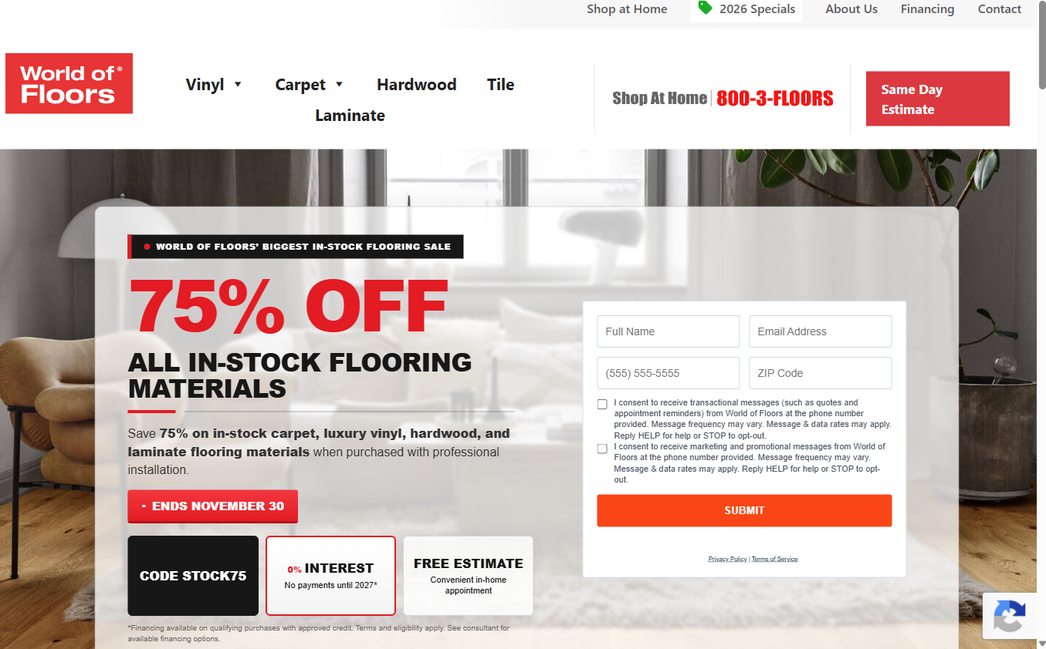
This option is a powerhouse for residents in Michigan looking for a streamlined experience. They don’t just provide the financing; they integrate it directly with their massive in-stock inventory. It is an all-in-one solution that simplifies the messy process of matching materials with a payment plan.
Instead of having to manage a separate bank loan and a contractor invoice, everything is consolidated into a single transaction at the point of sale. The standout feature is the ability to secure 0% interest with no payments required until 2027 on qualifying purchases. This provides massive breathing room for families.
This «payment deferral» model is incredibly powerful for those who have a lump sum of cash coming in later, such as a tax refund or a seasonal bonus. You can keep your liquidity in your savings account to earn interest while you wait to pay the balance.
Pros:
- Zero interest period until 2027 on select items
- Convenient in-home appointments for estimates
- Large selection of in-stock materials
Cons:
- Geographic limitations to Michigan area
- Requires approved credit for specific terms
2. Empire Today
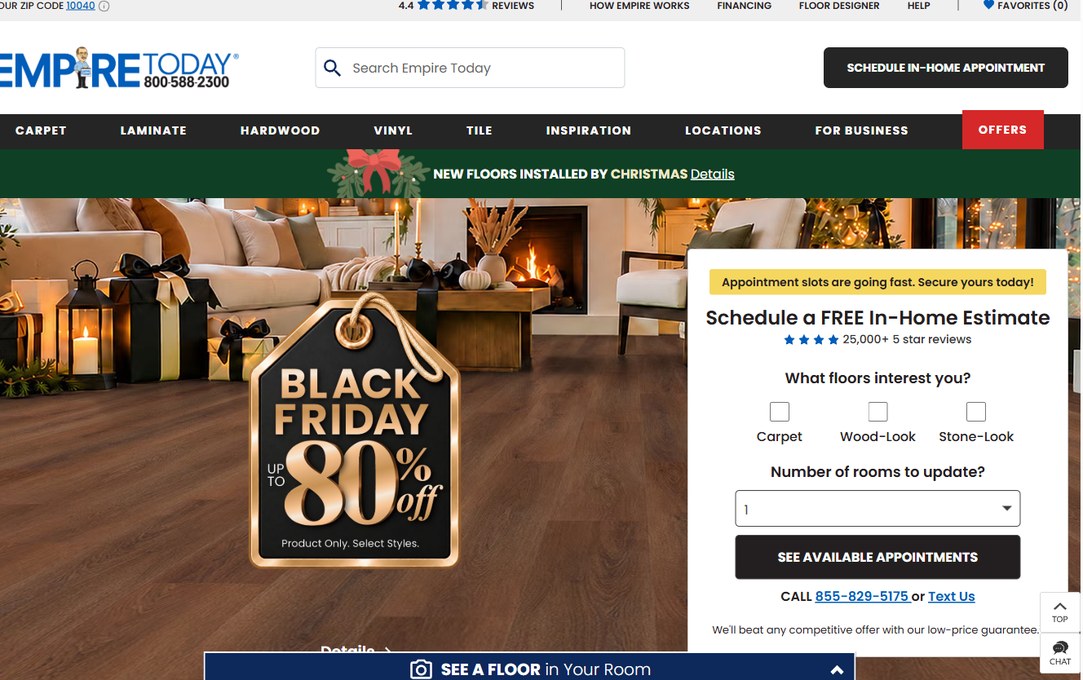
Empire Today is a household name for a reason, offering a massive footprint across the United States. Whether you are in Arizona, Florida, or New York, they likely have a service team ready to visit your home. They bridge the gap between high-end design and practical payment solutions.
Their financing model is built around simplicity and the classic «no interest» promise. If you can manage to pay off your balance within the 12-month window, you avoid the heavy interest that typically plagues home improvement projects. This is a perfect tool for the decisive shopper who has a clear budget.
It is a «use it or lose it» financial strategy that rewards those with high discipline. If you miss that window, the math changes very quickly in the lender’s favor.
Pros:
- Extensive service area across most major U.S. metros
- No interest if paid in full within 12 months*
- Comprehensive variety of flooring types
Cons:
- Strict deadline for the interest-free period
- Requires disciplined repayment to avoid interest
3. FastLendGo
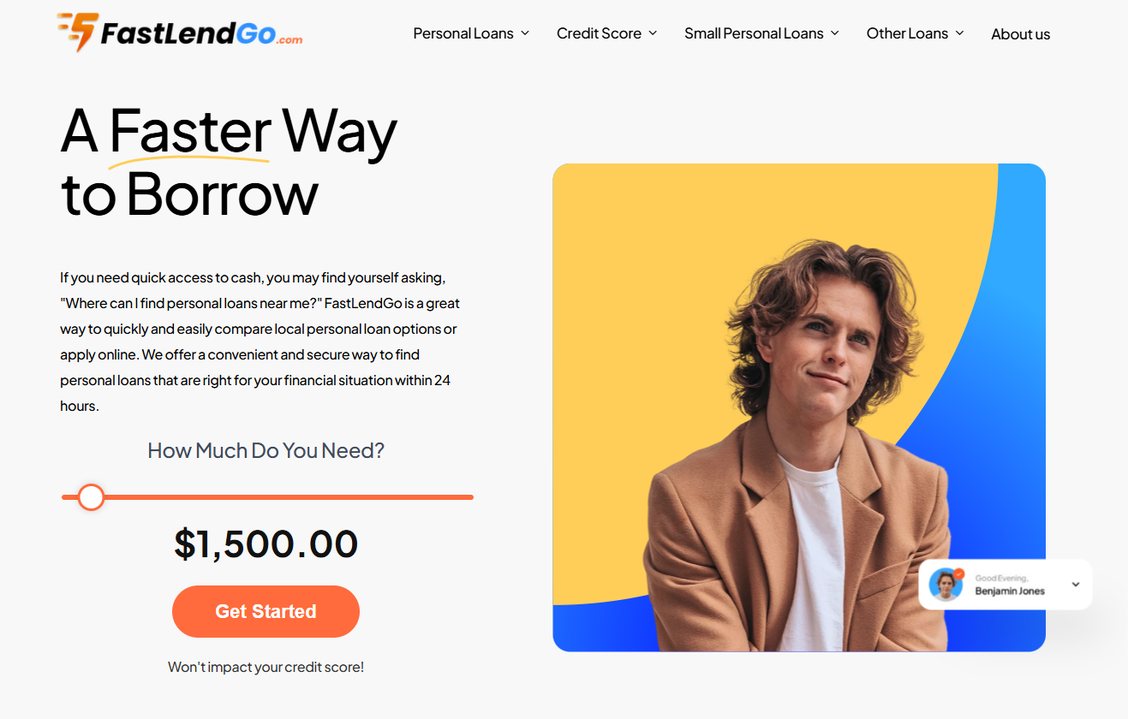
Sometimes, the problem isn’t the floor itself, but the suddenness of the need. FastLendGo acts as a versatile partner for personal financing. They don’t just look at the floor; they look at the person, offering a wide range of loan amounts from $500 all the way up to $5,000 and beyond.
This makes them a vital resource for smaller, targeted projects, such as replacing the flooring in a single bathroom or a small mudroom. A major bank might find the loan too small to bother with, but this lender fills that gap perfectly.
This lender is particularly useful for those who might not qualify for traditional bank loans due to recent credit fluctuations. They offer pathways for various credit profiles, including those with bad credit. It is a quick-access solution for when you need to bridge a gap before repairs turn into more expensive structural issues.
Pros:
- Flexible credit options for bad, fair, and good credit
- Rapid online application process
- Wide range of loan amounts available
Cons:
- Interest rates may vary significantly by credit score
- Focuses on personal loans rather than direct retail integration
4. Acorn Finance
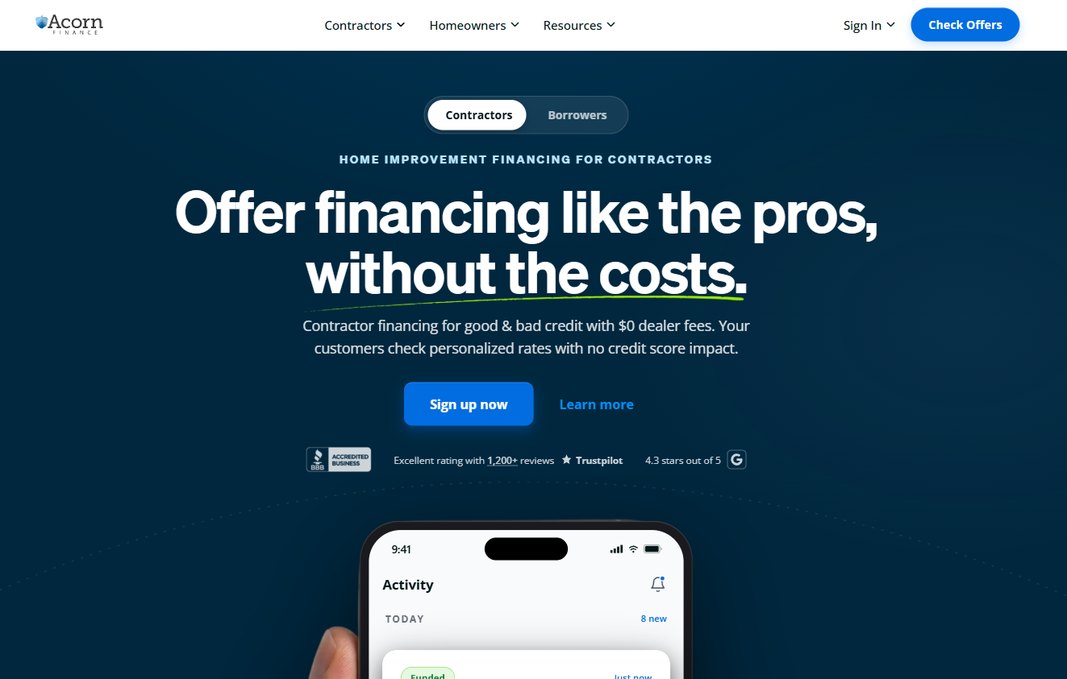
Acorn Finance operates like a matchmaking service for your home improvement needs. They connect borrowers with contractors while offering specialized financing. It is an excellent middle ground for those who want professional-grade options without the typical dealer fees that often inflate a quote.
By acting as a bridge, they allow you to shop through various lenders to find the one that fits your specific credit profile. The beauty of this system is the transparency. Homeowners can check personalized rates without a credit score impact.
This «soft pull» capability is a game-changer for the early stages of planning. It allows you to build a budget with high confidence before you ever commit to a contractor or a hard credit inquiry.
Pros:
- No dealer fees for the customer
- Soft credit check for personalized rates
- High user satisfaction ratings
Cons:
- Requires a connection between contractor and lender
- Approval depends on specific contractor partnerships
5. Synchrony
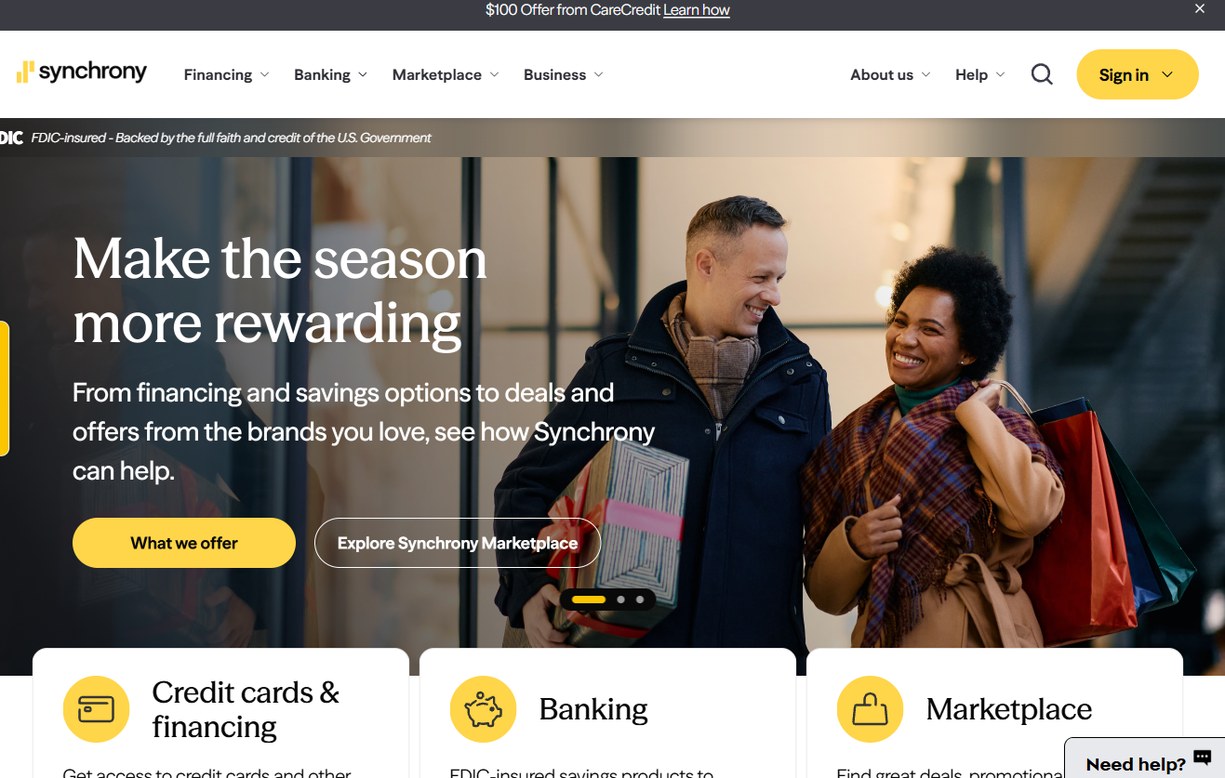
Synchrony is the giant in the background of the retail world. They provide the specialized credit cards and marketplace options that many large flooring retailers use. Using a Synchrony card is like having a specialized tool in your wallet that opens doors to exclusive retail deals.
If you frequently shop at major home improvement hubs, having a Synchrony-backed option can make the checkout process seamless. They offer a variety of ways to pay over time, including special financing for specific brands.
For instance, some retailers may offer 72-month special financing on specific items. This long-term window can make a very expensive hardwood installation feel much more manageable on a monthly basis. It is a bank-backed option that provides stability and a wide range of marketplace choices.
Pros:
- Wide availability at various local and national businesses
- Specialized financing deals for specific brands
- Backed by a large, established financial institution
Cons:
- Terms are often tied to specific retailer promotions
- Credit card interest rates can be high if not managed
Avoiding Common Financial Pitfalls
The most dangerous trap in flooring financing is the «deferred interest» trap. Many lenders offer 0% interest for a set period, such as 12 or 24 months. However, if you fail to pay off the full balance by the deadline, you might be hit with back-dated interest that covers the entire original amount.
This means if you owe $5,000 and have paid off $4,900 by the deadline, you may still be charged interest on the full $5,000 starting from the day you bought the floor. This can result in a sudden, several-hundred-dollar charge that catches homeowners completely off guard.
Always read the fine print. A mistake in your math or a late payment could turn a «free» loan into an expensive nightmare. It is vital to treat these terms as hard deadlines rather than suggestions. Set up automatic payments to ensure you never miss a window, but also manually verify the balance every month.
Another mistake is over-borrowing based on a «maximum» limit. Just because a lender will give you $10,000 doesn’t mean your floor should cost that much. It is easy to get swept up in the «while we are at it» mentality—deciding to upgrade baseboards or add matching transition strips in every room.
While these add value, they can push you past your intended budget. Always get multiple quotes from contractors before finalizing your loan amount. It is better to have a surplus in your savings than a deficit in your budget.
Finally, consider the «Total Cost of Ownership» for your new floor. When financing, don’t just look at the monthly payment; look at the total amount paid over the life of the loan. A $200 monthly payment for 36 months ($7,200 total) is much better than a $150 monthly payment for 60 months ($9,000 total).
