Top 6 Lenders for Personal Loans with Collateral in 2026

Top 6 Lenders for Personal Loans with Collateral in 2026
Last updated: 2026-11-26
Finding a lender when you have assets to pledge feels a bit like driving through a heavy fog. Collateral can shave significant amounts off your interest rates, but it brings a heavy weight of risk if things go sideways. You need a partner that respects the value of your security while offering crystal-clear terms.
When you pledge an asset—whether it is a vehicle, a savings certificate, or home fixtures—you are essentially trading ownership risk for a lower cost of capital. This trade-off sits at the very heart of secured lending. Understanding how this exchange works is vital to staying in the black financially.
This ranking helps borrowers who want to use what they own to unlock better financing. Whether you are trying to consolidate nagging debt or fund a major life milestone, the right choice depends on speed, the total amount, and how much grace a lender offers. A person needing $5,000 for an emergency car repair has different needs than a homeowner seeking $40,000 for a kitchen remodel.
- OneMain Financial
- JetzLoan
- Best Egg
- Freedom First
- Upgrade
- Navy Federal Credit Union
The Framework for Our Comparison
Evaluating these lenders meant looking way past the flashy advertisements. We scrutinized each institution based on their specific loan amounts, how fast they move money, and how transparent their application process actually is. We searched for lenders that minimize credit score damage during that initial inquiry phase.
A «soft pull» is a lifesaver because it allows you to shop around and compare APRs without the penalty of a hard inquiry. This is a critical distinction when you are actively weighing your options. You shouldn’t have to burn your credit score just to see what’s possible.
We also prioritized lenders offering flexibility in their terms. A loan that feels like a lifeline can quickly turn into a heavy burden if the monthly payments are too rigid or if the money takes weeks to arrive. We analyzed the difference between fixed-rate loans, where your payment stays constant, and variable-rate loans, which can fluctuate with the market.
The goal was to find a balance of accessibility and reliability. You want to ensure the lender you choose today doesn’t become a primary source of stress tomorrow. We wanted to find the sweet spot between getting the money you need and keeping your finances stable.
| Lender Name | Loan Amount Range | Funding Speed | Credit Impact |
|---|---|---|---|
| OneMain Financial | $1,500 – $35,000 | As soon as 1 hour | No impact to check |
| JetzLoan | $500 – $50,000 | As little as 24 hours | No hard credit pull |
| Best Egg | Up to $50,000 | Fast application | See site |
| Freedom First | See site | See site | See site |
| Upgrade | Up to $50,000 | Fast funding | Won’t impact score |
| Navy Federal Credit Union | See site | See site | See site |
Ranking the Best Collateral-Based Lenders
1. OneMain Financial
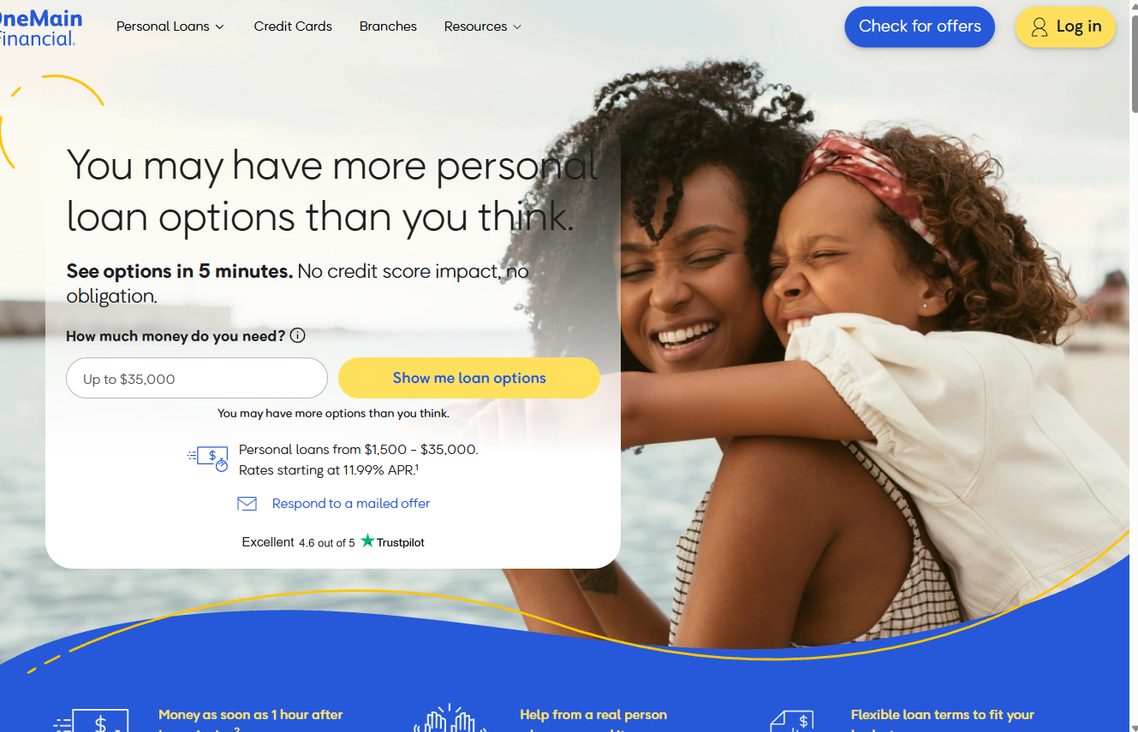
OneMain Financial is a strong choice for those who need to move with urgency. If you find yourself in a sudden pinch, they offer a path to liquidity that is remarkably swift. You can check your options in just five minutes without the dread of a credit score hit.
This lender is a reliable option for those who might have a less-than-perfect credit history. By offering loans from $1,500 up to $35,000, they cater to a wide spectrum of financial needs. Unlike many digital-only lenders that rely solely on automated algorithms, OneMain has a physical presence in 1,300 branches.
This physical presence provides a sense of security that digital-only players often lack. It allows for human intervention and manual review. That can be the difference between an approval and a rejection for people with complex financial histories.
Pros:
- Fast funding, potentially as soon as one hour after signing.
- No obligation or credit score impact during the initial check.
- Extensive branch network for face-to-face assistance.
- Loan amounts cap out at $35,000.
2. JetzLoan
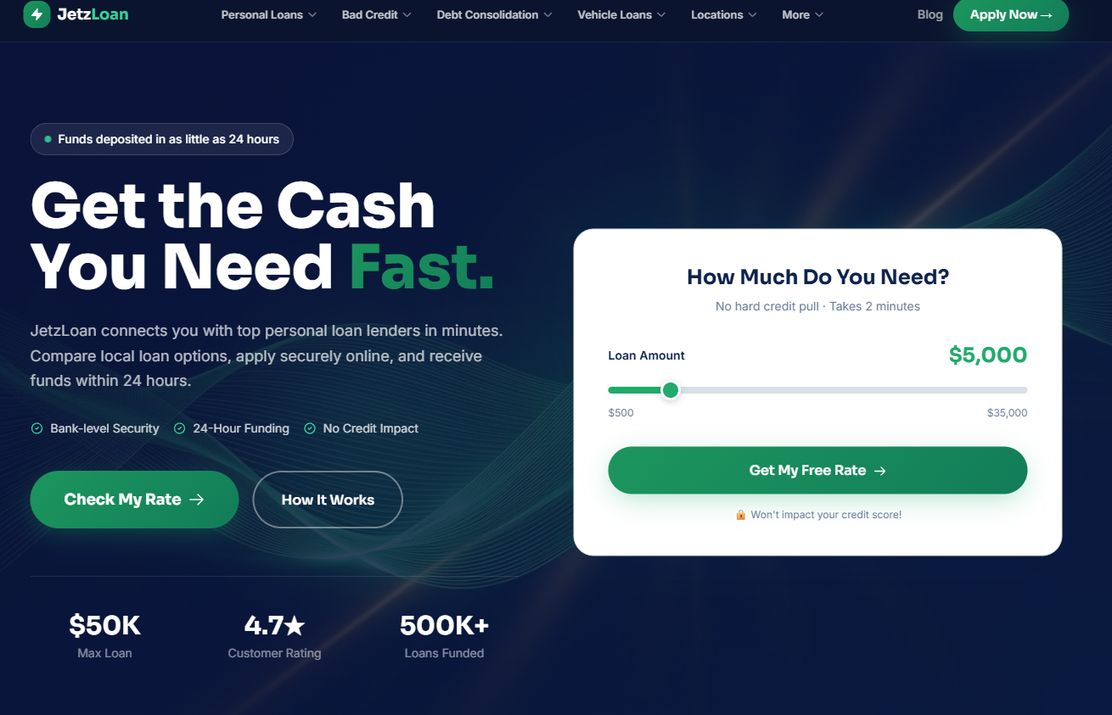
JetzLoan operates with the mindset that time is money. They connect borrowers with top lenders in a matter of minutes. It is a streamlined experience for the modern, fast-paced borrower who hates sitting on hold or navigating complex phone trees. They act as a digital concierge, simplifying the comparison process so you don’t have to visit ten different websites. (jetzloan.com)
With a maximum loan amount of $50,000, they cover significant life expenses like weddings, major travel, or home improvements. Their platform emphasizes a «no hard credit pull» policy, which is a breath of fresh air for anyone worried about their score. They provide a soft inquiry first, letting you see what you might qualify for before you commit to a formal application.
It is a high-speed option for those needing funds within a 24-hour window. This makes it ideal for high-velocity financial planning where every hour counts. If you need cash quickly without the typical paperwork headache, this is worth a look.
Pros:
- Extremely fast 24-hour funding window.
- No hard credit pull during the initial rate check.
- High maximum loan ceiling of $50,000.
- Primarily a matching service rather than a direct lender.
3. Best Egg
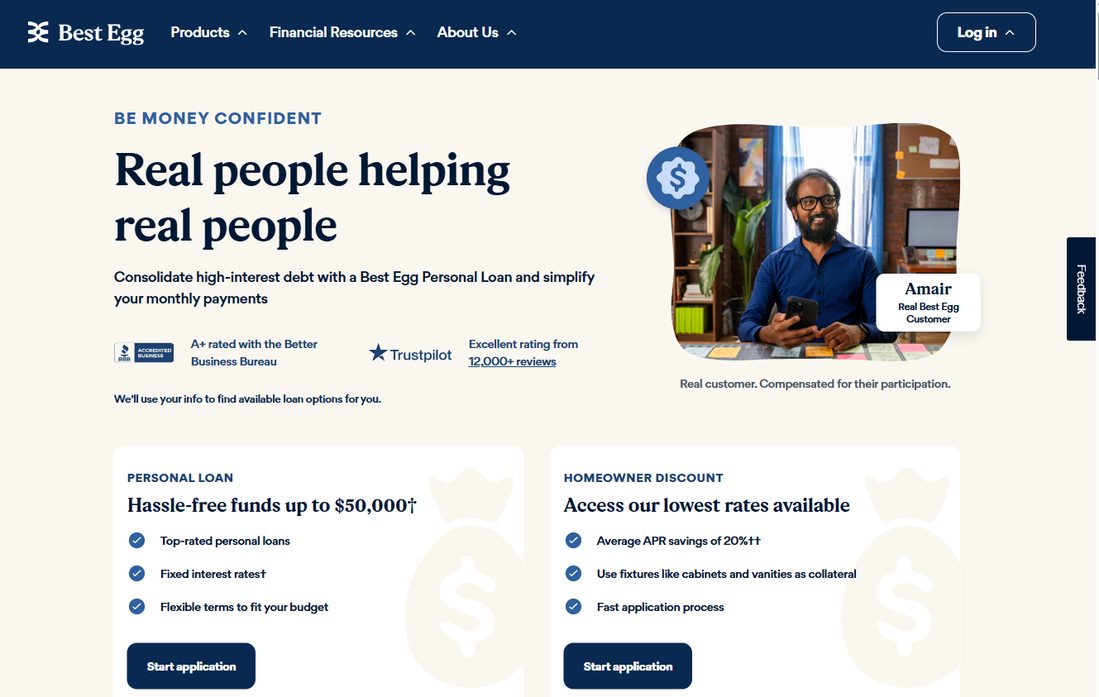
Best Egg is built for the person looking to clean up their financial slate. They specialize in helping users consolidate high-interest debt. If you are carrying multiple balances on credit cards with 22% APR, moving that debt into a single Best Egg loan with a lower interest rate can save you hundreds of dollars a month in interest alone.
By using fixtures like cabinets or vanities as collateral, homeowners can often unlock much better rates than traditional unsecured loans. Their reputation is backed by an A+ rating from the Better Business Bureau. They lean heavily on the concept of real people helping real people.
This human element, combined with fixed interest rates, provides a sense of stability that is hard to find in the fintech space. When you sign up, you aren’t just a data point in an algorithm. You are a client seeking a path to financial freedom.
Pros:
- Specialized options for homeowners using fixtures as collateral.
- Excellent customer satisfaction ratings and BBB standing.
- Fixed interest rates to prevent payment surprises.
- Collateral requirements can be specific to certain home improvements.
4. Freedom First
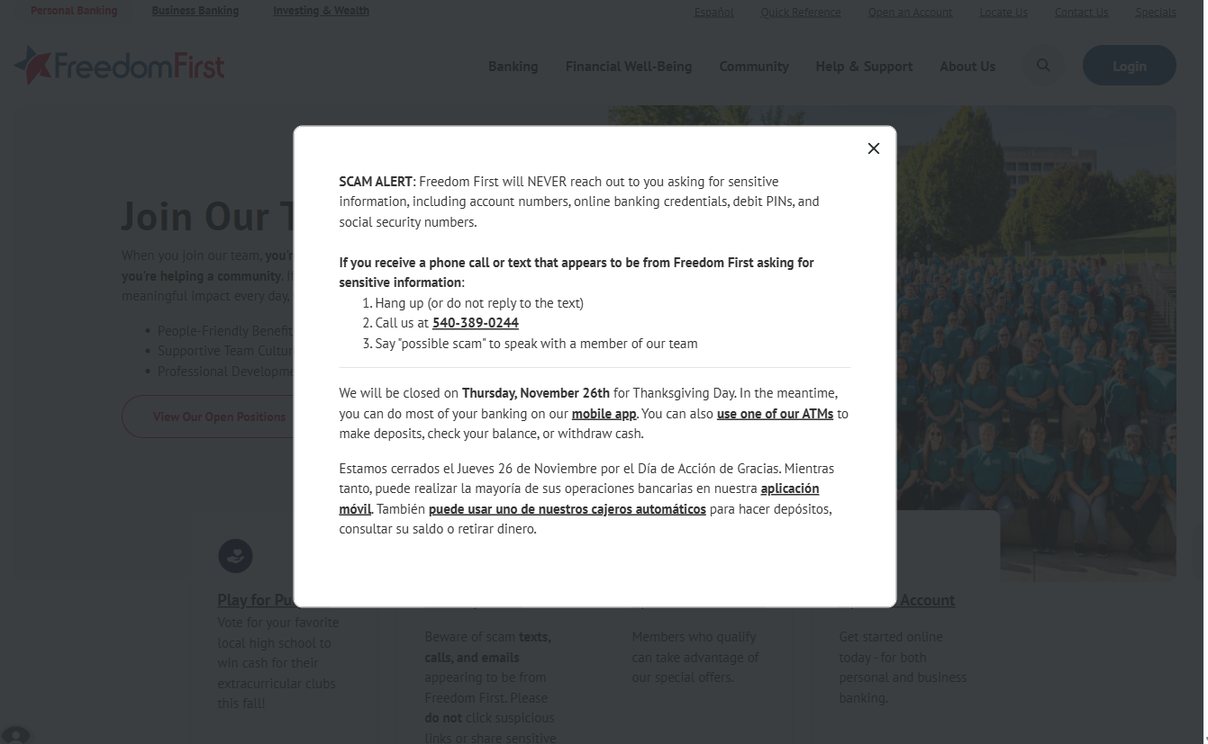
Freedom First operates on a more community-centric model. As a credit union, they focus on the specific needs of their members. Unlike large national banks that might prioritize shareholder dividends, credit unions are member-owned. This means the profit is often returned to the members in the form of better rates and lower fees.
They offer secured personal loans where you can use your vehicle, share account, or share certificate to back the loan. This is a traditional, reliable route for those who prefer the stability of a credit union. They prioritize security, constantly warning members against scams and protecting sensitive information.
For example, their process for securing a loan against a share certificate is much more straightforward than a traditional mortgage, as the collateral is already held within the institution. It is a choice for the cautious borrower who values institutional integrity and long-term relationships.
Pros:
- Allows for a variety of collateral types, including share certificates.
- Credit union structure often benefits the member.
- Strong emphasis on member security and fraud prevention.
- Availability may be restricted to specific geographic areas.
5. Upgrade
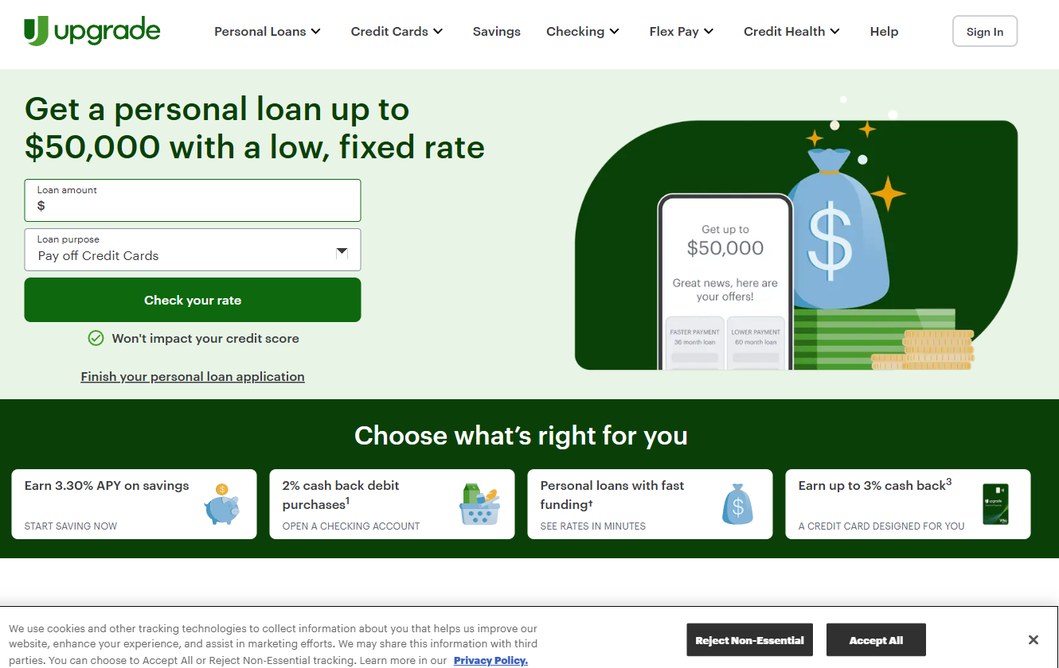
Upgrade is a versatile player in the lending market, offering more than just simple loans. They provide a suite of financial products including cards and rewards checking. For those needing a loan up to $50,000, they offer a quick way to check rates without impacting your score. Their model is built around flexibility, allowing you to tailor your repayment schedule to your cash flow.
They are particularly well-suited for those looking to tackle debt consolidation or large purchases. Their platform is sleek and efficient, making it easy to see how a loan fits into your broader financial picture. For instance, their interface often allows you to see how different loan terms—such as a 36-month vs. a 60-month term—will impact your monthly payment.
You can also see how these terms affect the total interest paid over the life of the loan. It is a modern solution for a multi-faceted financial life. It takes the guesswork out of long-term planning by showing you the numbers upfront.
Pros:
- Broad range of financial products to grow with.
- Check rates without impacting your credit score.
- High maximum loan limit of $50,000.
- Interest rates can vary significantly based on credit profile.
6. Navy Federal Credit Union
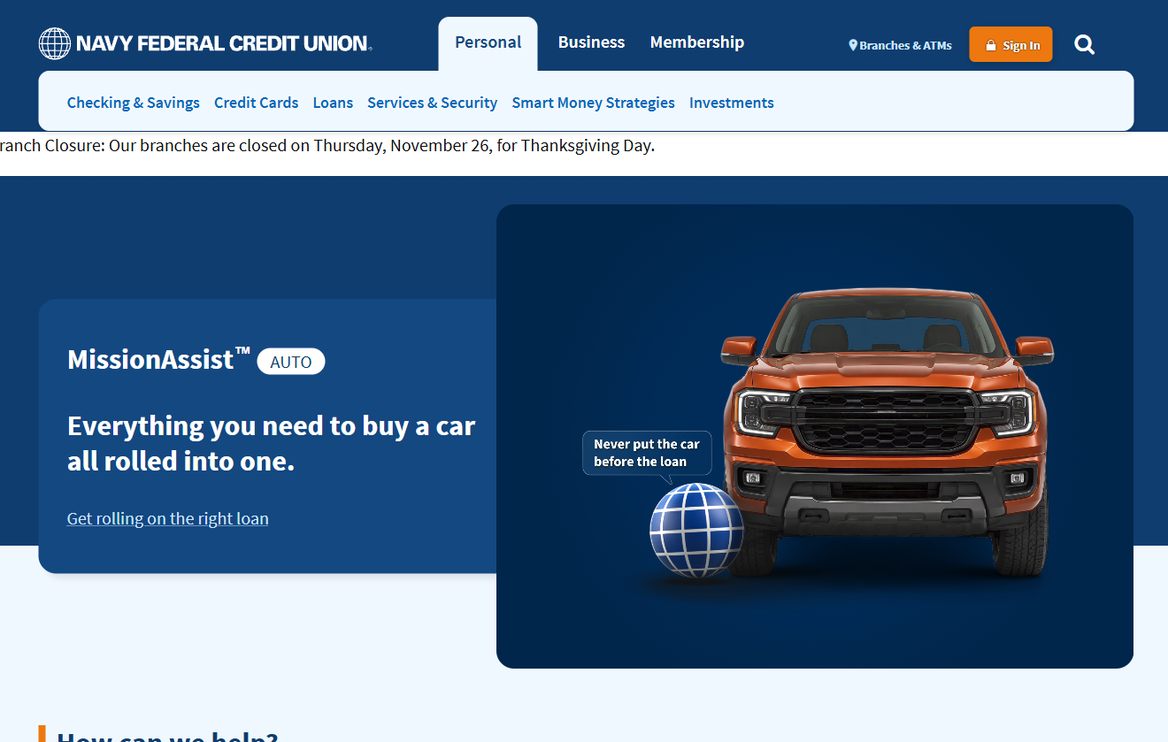
Navy Federal Credit Union is a powerhouse for those within their membership community. They offer a massive array of services, from auto loans to mortgages. For those who qualify, their loan products are designed with deep respect for the military community. This includes understanding the unique financial rhythms of military life, such as frequent moves or deployment-related income fluctuations.
While they are highly specialized, their member-focused approach often results in very competitive terms. They are not just a lender; they are a full-service financial partner that understands the nuances of service-related credit challenges. It is a top-tier choice for those who fit their specific membership criteria.
They offer a level of empathy and specialized product design that generalist banks simply cannot match. If you belong to the military community, you will likely find their terms much more accommodating to your lifestyle. It is a specialized service for a specific group of people.
Pros:
- Extensive range of banking and loan services.
- Highly specialized perks for veterans and military families.
- Strong institutional reputation.
- Strict membership requirements for eligibility.
Understanding Secured vs. Unsecured Loans
To make an informed decision, you must understand the fundamental difference between secured and unsecured lending. In an unsecured loan, the lender relies solely on your promise to pay, usually backed by your credit score. Because the lender takes on more risk, the interest rates are typically higher.
In a secured loan, you pledge an asset (collateral) to mitigate that risk for the lender. This distinction creates a ripple effect throughout your loan terms. For example, if you use a high-value asset like a vehicle or a certificate of deposit (CD), you are providing the lender with a safety net.
If you default, the lender has a legal right to seize and sell that asset to recoup their losses. Because this lowers the lender’s risk, you are often rewarded with:
- Lower Annual Percentage Rates (APRs).
- Higher borrowing limits that exceed what an unsecured loan would allow.
- A higher likelihood of approval if your credit score is in the «fair» rather than «excellent» range.
How to Prepare Your Assets for Pledging
Before you submit an application, you should perform a readiness audit on your potential collateral. Not every asset is created equal in the eyes of a lender, and being prepared can shave days off the approval process. Follow these specific steps to ensure you are ready to move forward:
First, verify the current market value of your asset. Lenders will not lend based on what you paid for an item, but what it is worth today. For a vehicle, check the Kelley Blue Book value. For home fixtures, consider recent appraisals of similar items.
Second, ensure the asset is free and clear of any existing liens. You cannot pledge a car that is still being financed by another bank; the title must be clear so the new lender can establish their priority claim. Third, gather all necessary documentation. This includes:
- Proof of ownership (Titles, Deeds, or Statements).
- Recent maintenance records (for vehicles).
- Valuation reports or receipts (for high-value home fixtures).
- Proof of insurance (lenders often require the asset to be fully insured to protect their interest).
Navigating the Collateral Landscape
Choosing a lender is not just about the lowest number on the screen. You must consider the «what if» scenarios. If you use your vehicle as collateral, you are essentially gambling your transportation on your ability to meet the monthly payments. Always ensure the monthly commitment fits comfortably within your budget, ideally leaving a 15-20% buffer for unexpected expenses.
One common mistake is ignoring the fine print regarding what constitutes valid collateral. Some lenders only accept cash-equivalent certificates, while others allow home fixtures. Misunderstanding these rules can lead to wasted time and frustration during the application process.
For instance, a lender might accept a luxury watch as collateral, but only if it is accompanied by a certified appraisal from a licensed jeweler. If you show up with just a receipt, the process will stall. Avoid the temptation to rush into a high-interest secured loan just because the approval is instant.
While speed is tempting, the long-term cost of interest can outweigh the benefit of immediate cash. Take a moment to compare the APR across different options before signing your name on the dotted line. A 2% difference in APR might seem small on a $5,000 loan, but on a $30,000 loan spread over five years, that difference can represent thousands of dollars in wasted capital.
