Top 4 RV Financing Lenders for 2026: A Real-World Comparison

Top 4 RV Financing Lenders for 2026: A Real-World Comparison
Last updated: 2026-11-26
Hitting the open road sounds like a dream, but the price tag on a modern motorhome can feel like a heavy anchor. Finding a way to fund that lifestyle involves more than just checking a monthly payment. You need a lender that actually understands recreational vehicle assets.
Unlike a standard sedan that loses value in a predictable line, an RV is a complex machine. It involves heavy mechanical systems, specialized electrical setups, and depreciation that shifts based on seasonal demand or how well it was stored. A lender that treats a $150,000 luxury Class A diesel pusher the same as a used compact car will likely fail you.
Choosing a lender is a balancing act between speed, interest rates, and credit requirements. Some people need a quick infusion of cash to snag a used trailer before someone else does. Others want a long-term, mortgage-style structure for a luxury fifth wheel.
The market has shifted lately. Lenders are more cautious about «lifestyle» assets, so you must be ready to prove your income is stable, not just high. This guide cuts through the noise to find the best fits for everyone, from the weekend warrior in a converted van to the full-timers living in a high-end motorhome.
- Wellby Financial
- Bank Iowa
- JetzLoan
- Sago Financial
How These Lenders Were Evaluated
We focused on how these institutions handle the unique nature of RV loans. Since these are depreciating assets, a lender’s willingness to work with various credit profiles is a massive factor. A lender that only looks at perfect scores leaves many wanderers stuck in their driveways.
We analyzed whether institutions would consider «stated income» for retirees. We also looked at how they value older, pre-owned recreational vehicles, which carry much higher risks for the bank. Speed of funding was another critical metric in our evaluation.
In a competitive market, waiting weeks for a check to arrive can mean losing your dream rig to another buyer. We looked at how quickly cash moves from the lender to the buyer and how transparent the application processes truly are. We prioritized those who offer digital signatures and real-time status updates over those requiring mailed, notarized paperwork.
Finally, we looked at «Asset Alignment.» This refers to whether the lender understands the specific collateral. Some banks hesitate to finance a campervan that has been heavily modified for off-road travel because the «blue book» value of a custom build is hard to pin down. We sought out lenders that show flexibility when the collateral is a lifestyle vehicle.
| Lender Name | Loan Amounts | Funding Speed | Credit Requirements | Special Features |
|---|---|---|---|---|
| Wellby Financial | see site | see site | see site | Recreational vehicle loans |
| Bank Iowa | see site | see site | see site | Agribusiness and personal banking |
| JetzLoan | Up to $35,000 | As little as 24 hours | No hard credit pull to check rate | Fast 2-minute application |
| Sago Financial | see site | see site | see site | RV service contracts and insurance |
The 2026 RV Financing Standouts
1. Wellby Financial
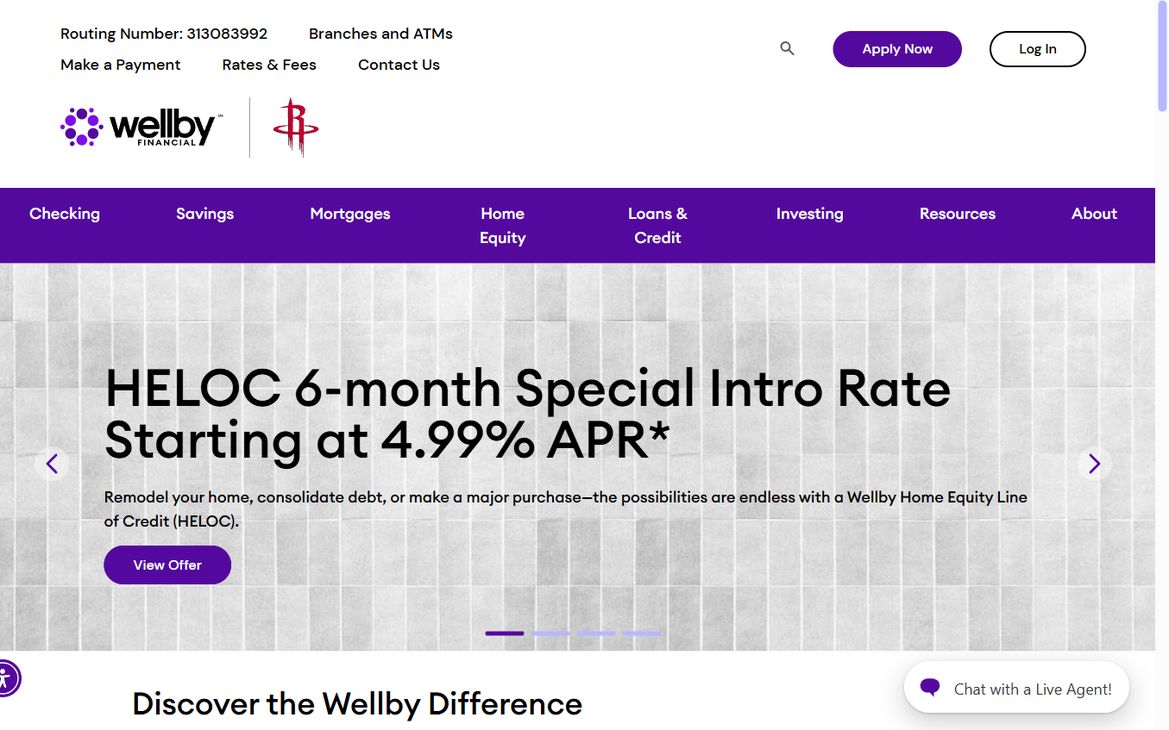
Wellby Financial is a versatile player in the lending space. They offer specific recreational vehicle loans designed to get you behind the wheel of your dream boat, RV, or even a motorcycle. It is a great option for those who want a dedicated financial institution for their lifestyle purchases.
Because they specialize in these types of assets, they are often more comfortable with the fluctuating resale values of recreational vehicles compared to a traditional mortgage lender. The process is designed to be streamlined, allowing you to estimate payments and apply online in minutes.
This efficiency is vital when you are standing on a dealership lot and need a quick answer to close the deal. For example, if you are looking at a seasonal sale on used campers, getting a pre-approval on your phone can be the difference between securing the rig or letting it slip away.
Pros:
- Dedicated recreational vehicle loan products.
- Fast online application process.
- Covers various lifestyle assets like boats and motorcycles.
Cons:
- Specific interest rates and terms are not publicly listed.
2. Bank Iowa
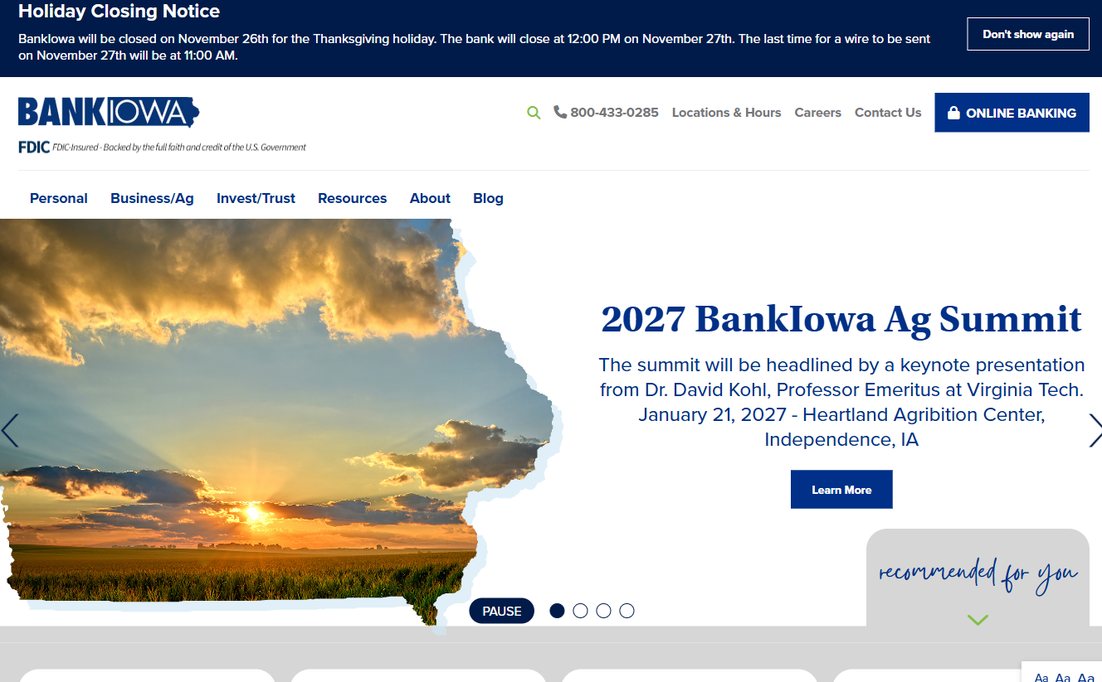
Bank Iowa brings a traditional, stable banking approach to the table. While they are heavily involved in the agricultural sector, their personal banking and credit services make them a reliable choice for those seeking a long-term relationship. They are an established institution that thrives on local relationships and stability.
If you are a landowner or involved in the agricultural industry, you may find that their understanding of your specific cash flow cycles makes them a much more flexible partner than a national tech-based lender. For those who value the stability of a community-focused bank, this is a solid contender.
They offer a range of products, from high-yield CDs to rewards credit cards, providing a full suite of financial tools beyond just the initial vehicle loan. This approach allows you to consolidate your finances, which could lead to better interest rates if you hold your savings and checking with them.
Pros:
- Strong presence in the agricultural and personal banking sectors.
- Offers diverse products like rewards credit cards and CDs.
- Established institutional reliability.
Cons:
- May lack the specialized agility of online-only lenders.
3. JetzLoan
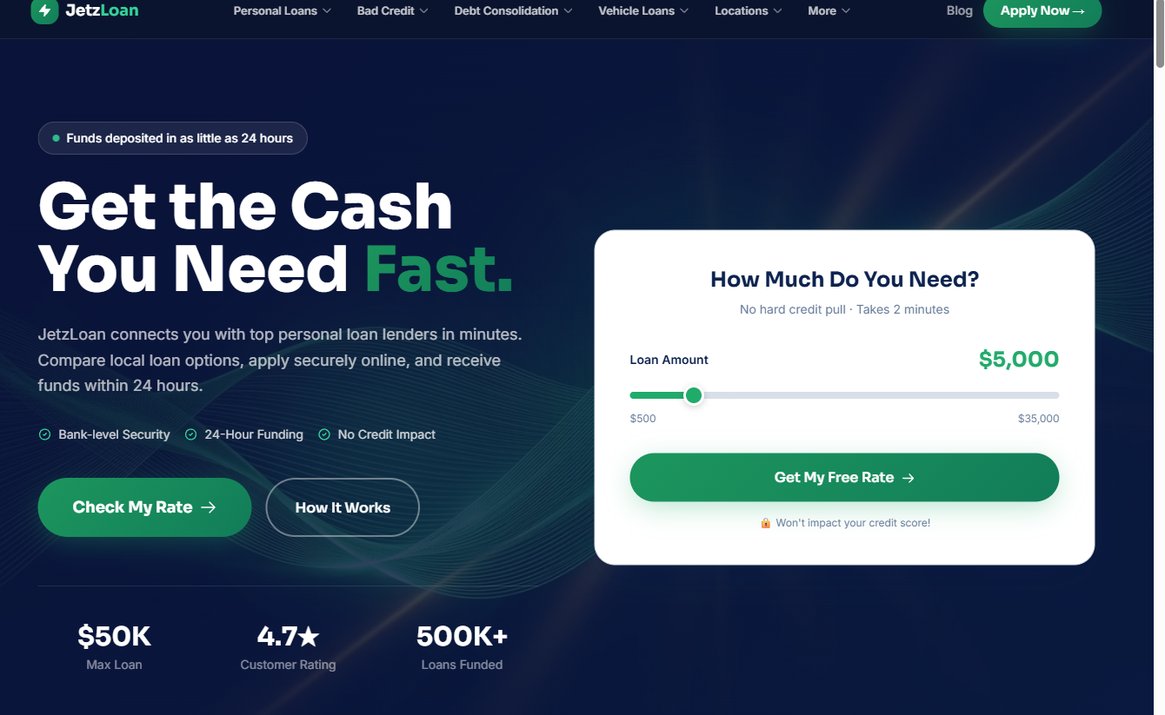
If you are in a hurry, JetzLoan is the sprinter of the group. They specialize in getting funds deposited in as little as 24 hours. This is perfect for the buyer who finds a used campervan on a weekend and needs to move fast before someone else grabs it.
They focus on the «micro-loan» aspect of the RV world, funding the smaller, more accessible entry points into the lifestyle. Their platform is built for speed and transparency, allowing users to check rates without a hard credit pull. This means you can shop around without worrying about your score taking a hit.
This is a massive advantage for those in the «window shopping» phase of their journey. It allows for multiple inquiries to gauge affordability without the damage of a hard inquiry on your credit report before you have actually committed to a specific loan.
Pros:
- Extremely fast funding, potentially within 24 hours.
- No hard credit pull required to check rates.
- Simple, two-minute application process.
Cons:
- Maximum loan amounts are capped at $35,000.
4. Sago Financial
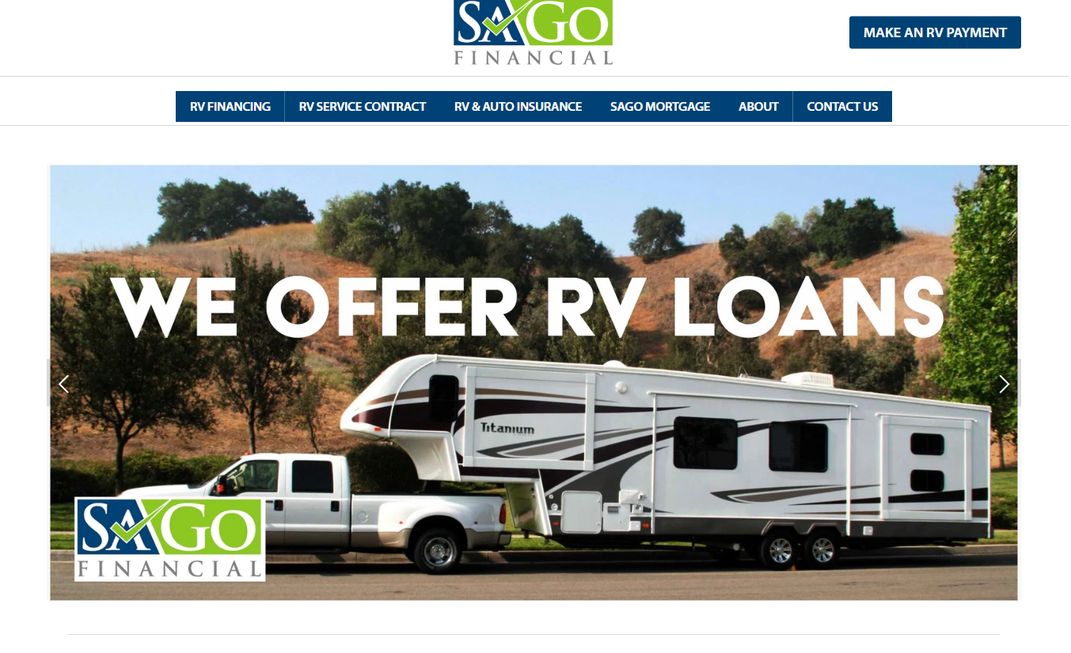
Sago Financial approaches RV financing through a comprehensive lens. They do not just stop at the loan itself; they connect with dealers across the country to help make the dream of owning a fifth wheel or travel trailer a reality. It is a holistic approach to ownership.
They recognize that the vehicle is only one part of the expensive hobby of RVing. They act as a bridge between the buyer and the dealer, focusing on service and integrity. For those who want an all-in-one solution that includes thoughts on service contracts and insurance, Sago is an interesting option.
This can be particularly beneficial when buying a high-end fifth wheel where the mechanical complexity requires specialized insurance and maintenance coverage that a standard auto policy might not cover. It simplifies the administrative side of ownership significantly.
Pros:
- Extensive network of RV dealers nationwide.
- Offers additional services like RV service contracts and insurance.
- Focuses on a wide range of RV types, including fifth wheels.
Cons:
- More complex service offerings may be overwhelming for simple buyers.
Understanding Loan Terms and Hidden Costs
Before signing any agreement, it is vital to understand the difference between a «fixed-rate» and a «variable-rate» loan. In the current economic climate, a fixed-rate loan offers predictability. This is essential when you are already managing the high costs of fuel, campsite fees, and propane.
A variable-rate loan might start lower, but if interest rates climb, your monthly payment could jump unexpectedly. This can throw your travel budget into chaos. Another critical factor is the «prepayment penalty.» Some lenders make extra money by charging you a fee if you try to pay your loan off early.
For a lifestyle enthusiast who plans to upgrade their rig in three years, a prepayment penalty can be a hidden tax on your future freedom. Always ask: «If I pay this loan off in 24 months instead of 60, will I be charged a fee?»
Furthermore, keep an eye on «origination fees.» These are one-time costs taken out of the loan amount upfront. If you borrow $30,000 but the lender takes a $1,000 origination fee, you only receive $29,000, but you are paying interest on the full $30,000. This can significantly increase your effective APR beyond the advertised number.
The Importance of the «Total Package» vs. The Monthly Payment
A common mistake is focusing solely on the monthly payment. Always look at the total cost of the loan over its entire lifespan. A lower monthly payment often means a longer term, which can cost you thousands of extra dollars in interest over time.
For example, a 10-year loan on a $50,000 RV might seem easy on the monthly budget. However, when you calculate the total interest paid over those 120 months, you might find you’ve paid for the RV twice. If you can afford a slightly higher monthly payment on a 5-year term, you will save a fortune.
Another pitfall is neglecting the «total package.» A lender might offer a slightly lower rate, but if they don’t offer the service contracts or insurance options you need, the convenience factor might vanish. Think about your long-term needs, from maintenance to protection, before you sign on the dotted line.
A lender that integrates service contracts into the financing can actually be more economical because it spreads the cost of essential protection over the life of the loan. This avoids requiring a massive upfront cash outlay for an extended warranty. Finally, consider the «Resale Value Gap.» RVs are notorious for steep depreciation in the first two years. If you take out a loan with a very small down payment, you might find yourself «underwater»—meaning you owe more on the RV than it is worth.
