Top 5 Lenders for Tractor Financing: 2026 Rankings

Top 5 Lenders for Tractor Financing: 2026 Rankings
Last updated: 2026-11-26
Buying a tractor is a massive undertaking that often feels like a heavy weight on a farmer’s chest. Whether it is a vintage harvester or a modern utility machine, the upfront cost can halt a growing operation in its tracks. Finding the right capital is the difference between a productive season and a mounting pile of debt. A single piece of heavy machinery can represent a significant portion of a farm’s total asset value, making the method of acquisition just as important as the machine itself.
When searching for agricultural financing, the goal is to find a balance between speed and stability. Every acre counts, and every dollar spent on interest is a dollar not spent on seeds or fertilizer. For many, the choice is between a long-term, low-interest bank loan that requires extensive collateral, or a rapid-response cash advance that keeps the wheels turning but comes with a higher premium. This list looks at providers that help bridge the gap between needing machinery and owning it outright.
- Koalafi
- Wyhy
- FastLendGo
- Happy Money
- PennyLime
Evaluating the Leading Agricultural Finance Options
The evaluation process focused on how these lenders handle diverse financial profiles. Not every farmer has a pristine credit score, and many operate on seasonal cash flows that traditional banks find difficult to grasp. For instance, a producer might have massive revenue in October during harvest but very little in February during the planting preparation phase. Traditional lending models often struggle with this «lumpy» cash flow, which is why alternative financing has become so vital in the modern agricultural landscape.
Therefore, accessibility and the ability to leverage existing earnings were key metrics for this ranking. We looked at whether a lender cares more about a decades-old credit history or the immediate, verifiable revenue coming through a merchant account. Speed of funding and the flexibility of terms were also prioritized. A delay in receiving funds can mean missing a planting window, which is a catastrophic setback that can ruin a year’s yield. The following comparison highlights the core features of each provider to help determine which fits a specific business model.
| Lender Name | Loan/Advance Amount | Key Terms/Rates | Speed/Requirements |
|---|---|---|---|
| Koalafi | See site | Lease-to-own options | Trusted by 28k+ merchants |
| Wyhy | See site | Variable rates available | Member-based credit union |
| FastLendGo | $500 – $5,000 | See site | Quick access to cash |
| Happy Money | $5,000 – $50,000 | 8.95% – 35.99% APR | Fixed payments |
| PennyLime | $500 – $10,000 | Merchant cash advance | 90 days of verified earnings |
Understanding Different Financing Structures
Before committing to a provider, it is crucial to understand the mechanical differences between the types of capital you might receive. Not all «loans» are created equal, and selecting the wrong structure can lead to unforeseen tax implications or repayment struggles during a lean year.
Lease-to-Own vs. Traditional Term Loans
A lease-to-own structure, such as those offered by Koalafi, functions differently than a standard bank loan. In a traditional term loan, you borrow the full amount, receive the asset, and then work to pay back the principal plus interest. You own the asset from day one, but you carry the full debt on your balance sheet. In a lease-to-own scenario, you are essentially paying for the use of the equipment with the option to purchase it at the end of the term.
This can be much easier on cash flow, as it often requires less stringent credit checks, but it may result in a higher total cost of ownership over time. It is a trade-off between immediate accessibility and the long-term price of the machine. Some farmers prefer the upfront simplicity, while others prefer the long-term ownership benefits of a standard loan.
Merchant Cash Advances (MCA) vs. Personal Loans
For those with fluctuating incomes, an MCA (like PennyLime) is a unique beast. Unlike a personal loan from a provider like FastLendGo, which is a lump sum paid back in fixed monthly increments, an MCA is a sale of your future receivables. The lender gives you cash upfront and takes a percentage of your daily or weekly sales until the amount is repaid. This is highly beneficial if your income is seasonal, as you pay back more when you are making more, and less when business is slow.
However, the «effective interest rate» can feel much higher because the repayment is tied to your revenue stream rather than a fixed schedule. It is a flexible way to manage cash flow, but the math can get complicated if your sales drop unexpectedly. You have to weigh the flexibility of the repayment against the total cost of the capital.
The Top Rated Financing Providers for 2026
1. Koalafi
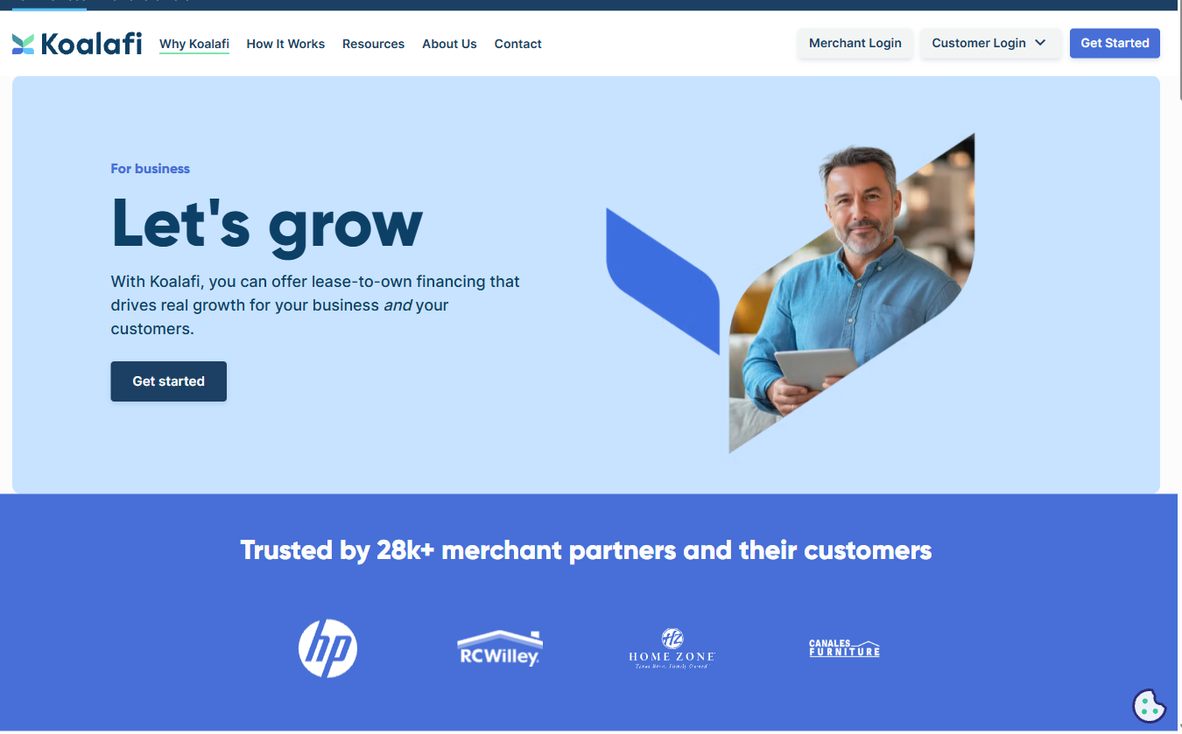
Koalafi operates as a bridge between retailers and customers who need more breathing room. By offering lease-to-own financing, it allows businesses to attract shoppers who might otherwise walk away due to high upfront costs. For an agricultural supplier or a heavy equipment dealer, this is a strategic tool for those looking to increase their average order value significantly. Instead of a customer saying, «I’ll come back when I have the $15,000 for the tractor,» they can say, «I can start my lease today.»
This option is particularly effective for non-prime shoppers who struggle to secure traditional bank loans. Instead of a hard «no» from a big bank, Koalafi provides a path to ownership. This builds long-term relationships between the merchant and the buyer through manageable, structured payments over time. It effectively turns a one-time transaction into a multi-year customer relationship.
Pros:
- Helps convert non-prime shoppers into loyal customers
- Can increase average order value by up to 40%
- Provides lease-to-own structures for business growth
Cons:
- Focus is primarily on the merchant-customer relationship
- Requires merchant partnership to access the service
2. Wyhy
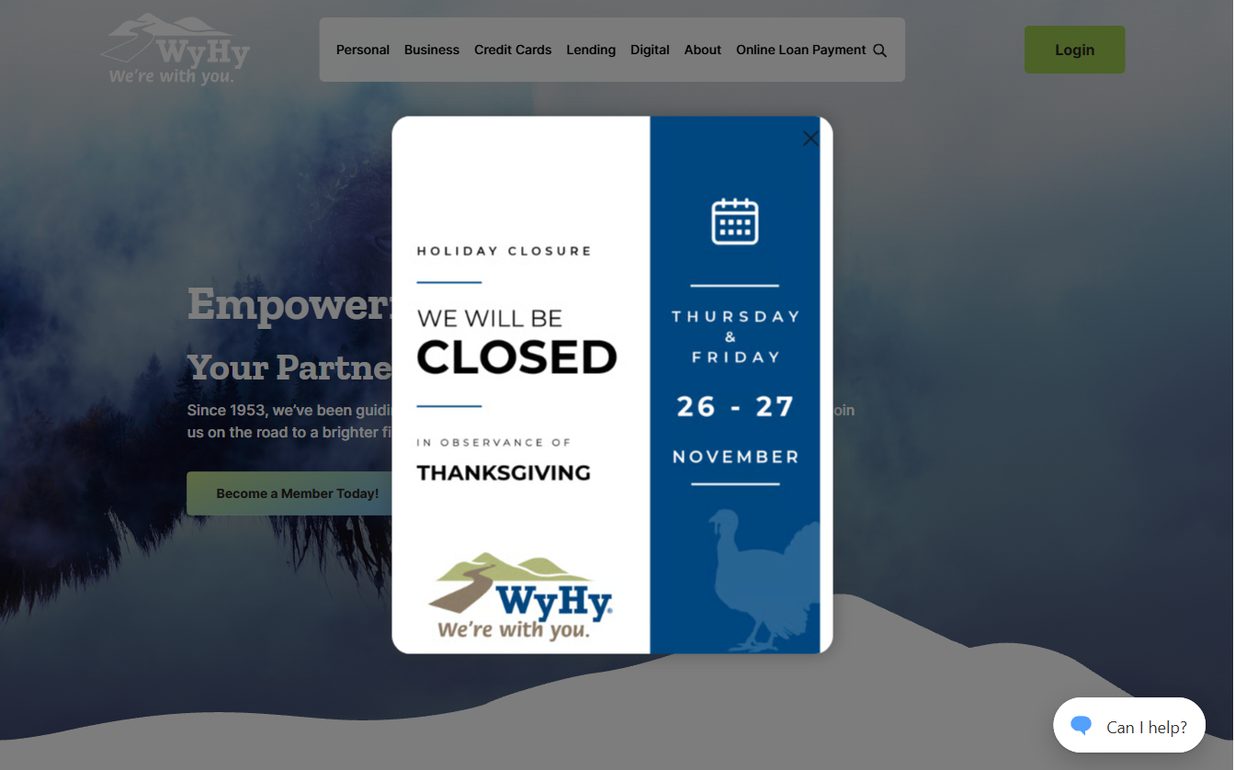
Wyhy functions as a traditional federal credit union with a deep-rooted history dating back to 1953. It is built for members who want to feel like a partner rather than just a number in a database. This sense of community is vital for those in rural areas who rely on local stability and an understanding of agricultural cycles. While big-box banks might see a «high-risk» farmer during a drought year, a credit union is more likely to work with the member to restructure terms.
They offer a diverse suite of products, including savings accounts and credit cards, which can help manage farm finances throughout the year. With competitive rates on certificates and savings, it is a holistic way to manage money. For those looking to build equity in their operation, the ability to use savings instruments to hedge against equipment depreciation makes it an excellent choice for those seeking a long-term banking relationship.
Pros:
- Deeply established community-based credit union
- Offers various savings and certificate options
- Member-focused approach to financial freedom
Cons:
- Membership may be restricted to specific regions
- Traditional credit union structure can be slower
3. FastLendGo

FastLendGo is designed for the person who needs cash yesterday. If an unexpected repair on a tractor leaves a field unplowed, this provider offers quick comparisons of personal loan options. In the world of farming, time is often more valuable than the interest rate. If a broken hydraulic pump prevents you from finishing a harvest, the cost of the delay far outweighs the cost of a slightly higher-interest loan. (fastlendgo.com)
The platform is highly versatile, offering everything from small $500 loans to larger sums for specific needs like auto or roof repairs. It is a practical safety net for individuals who need to bypass the red tape of traditional institutions. It is built for speed and accessibility, making it a go-to for emergency liquidity rather than long-term capital investment.
Pros:
- Covers a wide spectrum of credit scores
- Fast comparison of local loan options
- Multiple loan amounts for various emergencies
Cons:
- Focus is on personal loans rather than business assets
- Rapid approval can sometimes lead to higher costs
4. Happy Money

Happy Money focuses on the psychological relief of debt consolidation. For a farmer or business owner buried in high-interest credit card debt, this provider offers a way to simplify life. Managing multiple different due dates and varying interest rates can be mentally exhausting. A single, fixed payment with a clear end date can provide much-needed peace of mind, allowing you to focus on the field instead of the mail.
With loan amounts ranging from $5,000 to $50,000, it is a substantial tool for stabilizing a budget. The fixed rates, starting as low as 8.95% APR, can save a borrower thousands of dollars over the life of the loan. It is a clear-cut way to regain control of your financial narrative and stop the cycle of paying only the minimum on high-interest revolving credit.
Pros:
- Fixed payments with a set end date
- Potential to save thousands in interest
- Pre-approval doesn’t impact credit score
Cons:
- Interest rates can reach as high as 35.99% APR
- Origination fees are deducted from loan funds
5. PennyLime
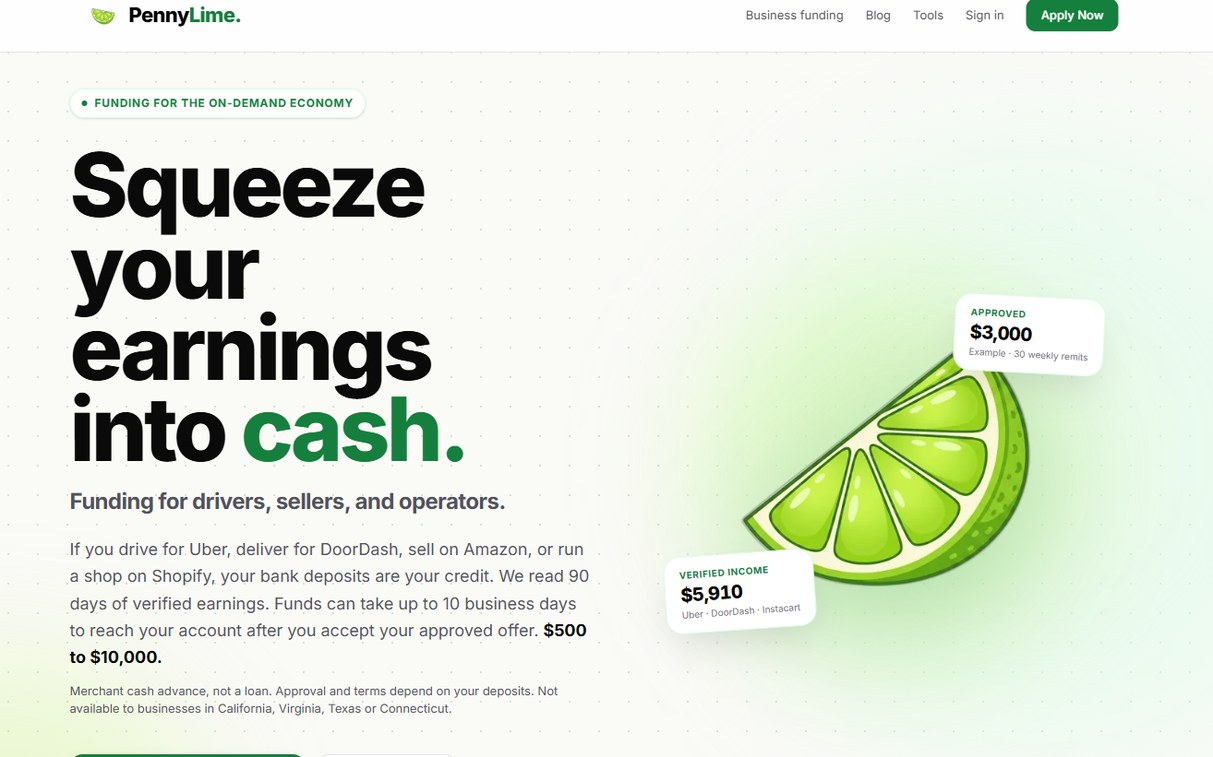
PennyLime is a specialized tool for the modern gig worker and the on-demand operator. This includes the growing number of small-scale agricultural contractors and independent farm laborers who work through various digital platforms. Instead of looking at a traditional credit score, which may not reflect the stability of a modern digital income, it looks at your actual work. If you are driving for Uber or selling on Amazon, your recent earnings are your collateral.
This is a merchant cash advance rather than a traditional loan, meaning it is based on your verified income. It is perfect for those who have fluctuating income streams but need immediate liquidity. It turns your hard work into instant cash flow to keep moving, making it a vital tool for those who operate outside the traditional banking ecosystem.
Pros:
- Uses verified earnings instead of just credit scores
- Ideal for gig workers and platform operators
- Fast access to funds based on recent history
Cons:
- Not a loan, which changes the repayment structure
- Not available in CA, VA, TX, or CT
- Funding can take up to 10 business days
Avoiding Pitfalls in Agricultural Lending
The most common mistake is ignoring the fine print regarding interest and fees. While a low monthly payment looks enticing on a brochure, the total cost of borrowing can be staggering if the term is too long. For example, a loan with a low interest rate but a 10-year term may actually cost you double the principal by the time you finish paying it off. Always calculate the total amount you will have paid by the end of the term, including all compounding interest and any hidden service fees.
Another trap is failing to align the loan type with the asset being purchased. Using a personal loan for a piece of heavy machinery might seem easy, but it lacks the tax benefits often associated with business equipment loans. In many jurisdictions, business equipment can be depreciated for tax purposes, which can offset your taxable income. A personal loan does not typically offer these same advantages. Know whether you are building equity or simply paying for temporary access.
Lastly, timing is everything in the world of farming and heavy machinery. Do not wait until the machine breaks to start the application process. Even the fastest lenders like FastLendGo or PennyLime take time to process paperwork and verify income. Plan your financing well before the season begins to avoid the stress of last-minute desperation, which often leads to poor decision-making and high-interest debt.
Preparation Checklist for Agricultural Loans
To ensure you secure the best possible terms, you should approach any lender with a structured «financial dossier.» Having these items ready can shave days off the approval process and demonstrate to the lender that you are a low-risk, professional operation.
| Document Type | Why It Matters | Details to Include |
|---|---|---|
| Tax Returns (Last 2 Years) | Proves income stability | Full federal and state filings |
| Bank Statements | Shows cash flow patterns | At least 3-6 months of history |
| Asset Valuation | Determines collateral value | Appraisals or current market listings |
| Business Plan / Use of Funds | Justifies the loan amount | Specific details on the machinery/repair |
