Top 4 Lenders for Bad Credit Loans in Arkansas for 2026

Top 4 Lenders for Bad Credit Loans in Arkansas for 2026
Last updated: 2026-11-26
Trying to sort out your finances in Arkansas can feel like wandering through the Ozarks without a compass. When your credit score takes a sudden turn for the worse, finding a lender that treats you like a human being instead of a math problem becomes the top priority. Many people spend hours staring at screens, wondering if anyone will actually approve their application.
The stress of financial uncertainty is heavy. It can lead to a kind of mental paralysis when urgent, real-world expenses suddenly hit your doorstep. You aren’t just looking for money; you are looking for a way to breathe again without making your situation worse.
Finding a good match requires looking past flashy advertisements. It is about aligning your immediate cash needs with a lender’s specific tolerance for risk. Whether you are dealing with an unexpected car repair that keeps you from working, or trying to consolidate a mountain of high-interest debt, the goal is to secure capital without digging a deeper hole.
The difference between a helpful loan and a predatory one usually hides in the fine print. You have to watch the APRs, origination fees, and repayment terms closely. One wrong move can turn a quick fix into a long-term headache.
- Bank of Little Rock
- FastLendGo
- Union Bank
- BOK Financial
Evaluating Arkansas Lenders for Challenging Credit Profiles
Picking a lender in the Natural State involves more than just checking a box on a website. You have to look at how each institution handles non-traditional credit histories. Some lenders prioritize speed, offering quick digital approvals that often come with hefty interest rates. Others offer the stability of a traditional brick-and-mortar relationship.
In Arkansas, the distinction between a credit union, a community bank, and a national lender matters. This choice can significantly impact the interest rate you get and the level of personal service you receive when things go wrong. A local bank might be more forgiving, whereas a national lender might just see a number.
The comparison process for this list focused on accessibility and variety. We looked at how these institutions cater to different financial tiers, from those with «bad» credit to those needing a quick bridge for an emergency. We evaluated them based on how easy they are to apply with, how fast the money arrives, and how many different credit scores they accept.
The following table provides a snapshot of what these providers bring to the table for Arkansas residents.
| Lender Name | Loan Amounts | Credit Requirements | Specialty Focus |
|---|---|---|---|
| Bank of Little Rock | See site | See site | Personal & Business Banking |
| FastLendGo | $500 – $5,000+ | Bad, Fair, & Great Credit | Quick Access/Emergency |
| Union Bank | See site | See site | Personal, Home, & Vehicle |
| BOK Financial | See site | See site | Personal, Business, & Wealth |
Arkansas Lender Rankings
1. Bank of Little Rock
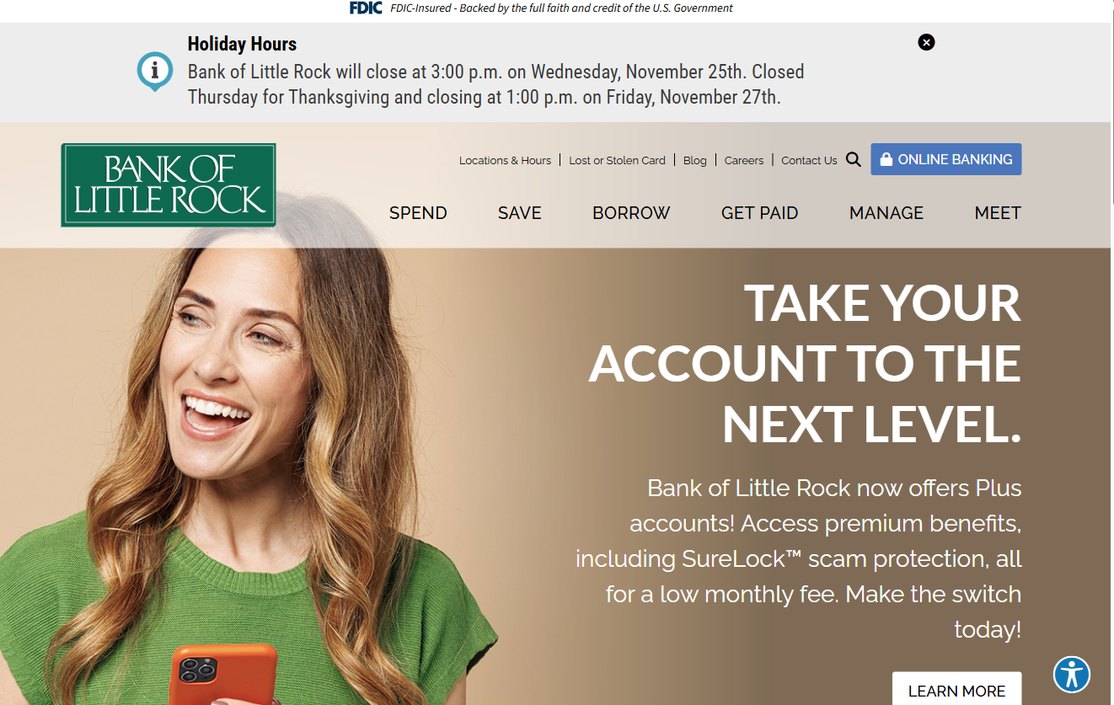
Bank of Little Rock is a cornerstone for those seeking a blend of personal and business banking. They provide a sense of community stability that digital-only lenders often lack. For residents in the Little Rock area, having a local institution can make building a long-term relationship much smoother.
When you walk into a local branch, you are dealing with neighbors who understand the Arkansas economy. This can be a significant advantage if you are applying for a small business loan or a mortgage. They know the local landscape better than an algorithm in a different time zone.
This lender works well for individuals who want to manage their daily finances alongside their borrowing needs. While they offer various products, their presence in personal banking provides a structured environment for those looking to manage money effectively over time.
They are an ideal choice for the «stability seeker.» This is someone who may have had a rough patch in the past but is now looking to rebuild a solid foundation through structured savings and predictable loan products.
Pros:- FDIC-insured security for peace of mind.
- Offers both personal and business banking options.
- Established local presence in Arkansas.
- May have stricter requirements than specialized bad credit lenders.
2. FastLendGo
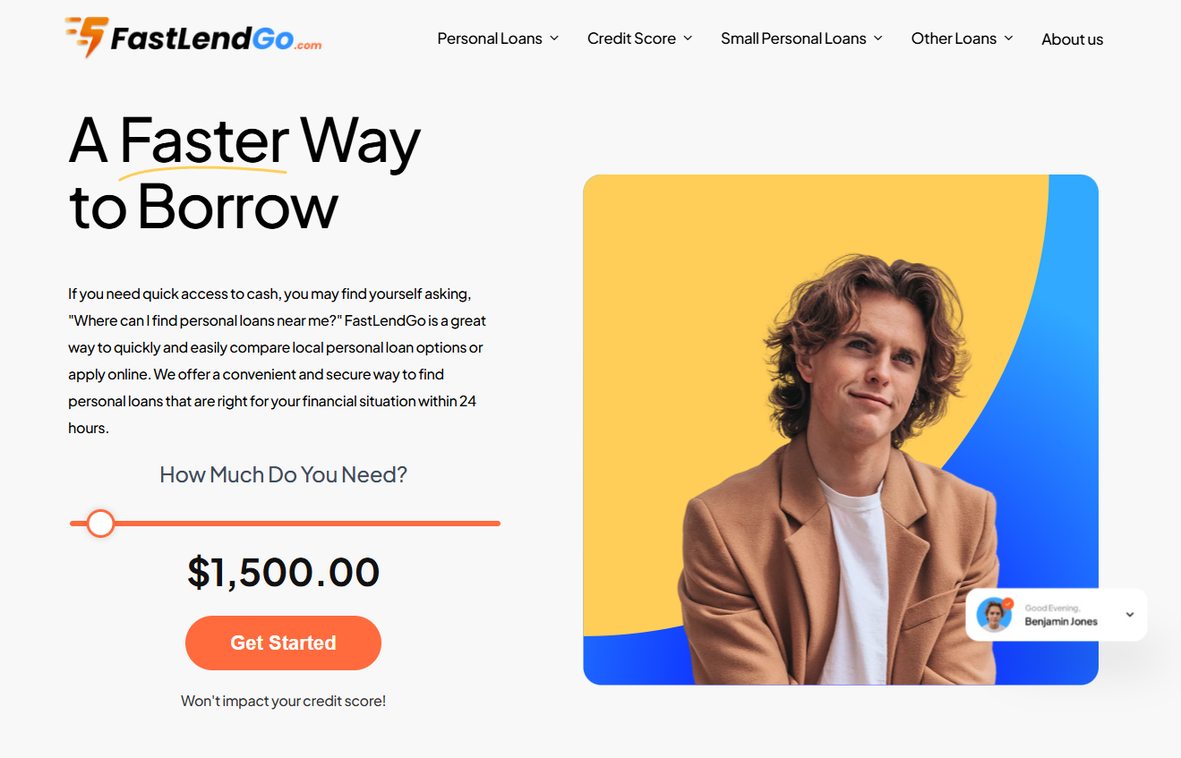
Life doesn’t wait for your credit score to improve. Sometimes you just need cash yesterday. FastLendGo operates on the principle of speed, targeting those who might be struggling to find traditional support. They offer a range of products, from small $500 loans to larger $5,000 amounts.
Imagine your car’s transmission fails and you need it fixed by Monday to keep your job. In that moment, the speed of a digital lender becomes more valuable than the lower interest rates of a traditional bank. You need a solution that works as fast as your crisis.
This is a go-to option for people facing specific emergencies like auto repairs or dental work. Because they cater to bad, fair, and great credit, they remove much of the intimidation factor found in the banking world. You won’t feel judged for a low score here.
Instead, you are met with a streamlined digital application designed to get you from «need» to «funded» in a matter of hours or days. It is a straightforward path for those needing immediate liquidity when traditional credit lines have dried up.
Pros:- Covers a wide spectrum from bad to great credit.
- Specialized loans for auto, dental, and roof repairs.
- Quick comparison of local personal loan options.
- Rapid access to cash often comes with higher interest costs.
3. Union Bank
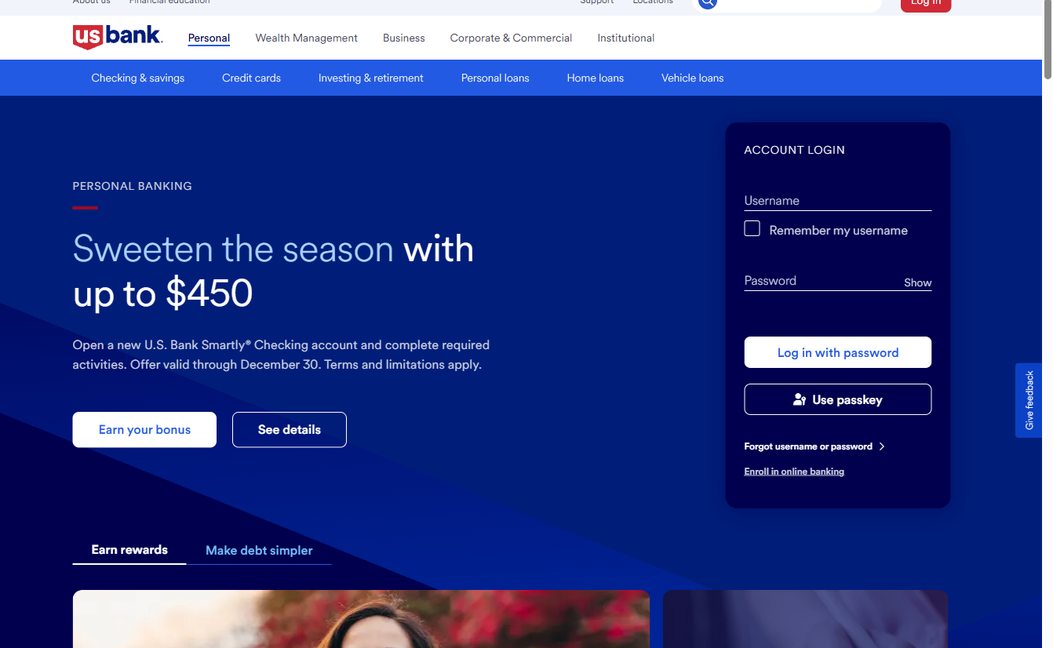
Union Bank offers a suite of services that makes them a versatile choice for various life stages. From personal checking to complex wealth management, they cover almost every financial corner. This makes them ideal for someone looking to grow their footprint rather than just solving a one-time problem.
If you are transitioning from renting to buying your first home in Fayetteville or Little Rock, Union Bank provides the institutional depth to support that transition. They are built for the long haul, not just the quick fix.
They provide a structured environment for managing debt through various loan products, including home and vehicle options. If you are looking to consolidate debt or move toward a more holistic banking experience, their diverse product line offers several different paths to take.
Their ability to bundle services—such as linking a personal loan to a high-yield savings account—can help users create a more cohesive financial strategy. This approach prioritizes both immediate needs and long-term wealth accumulation.
Pros:- Extensive variety of products including home and vehicle loans.
- Offers rewards and incentives for new checking accounts.
- Comprehensive wealth management for long-term stability.
- Complexity of products may be overwhelming for simple needs.
4. BOK Financial
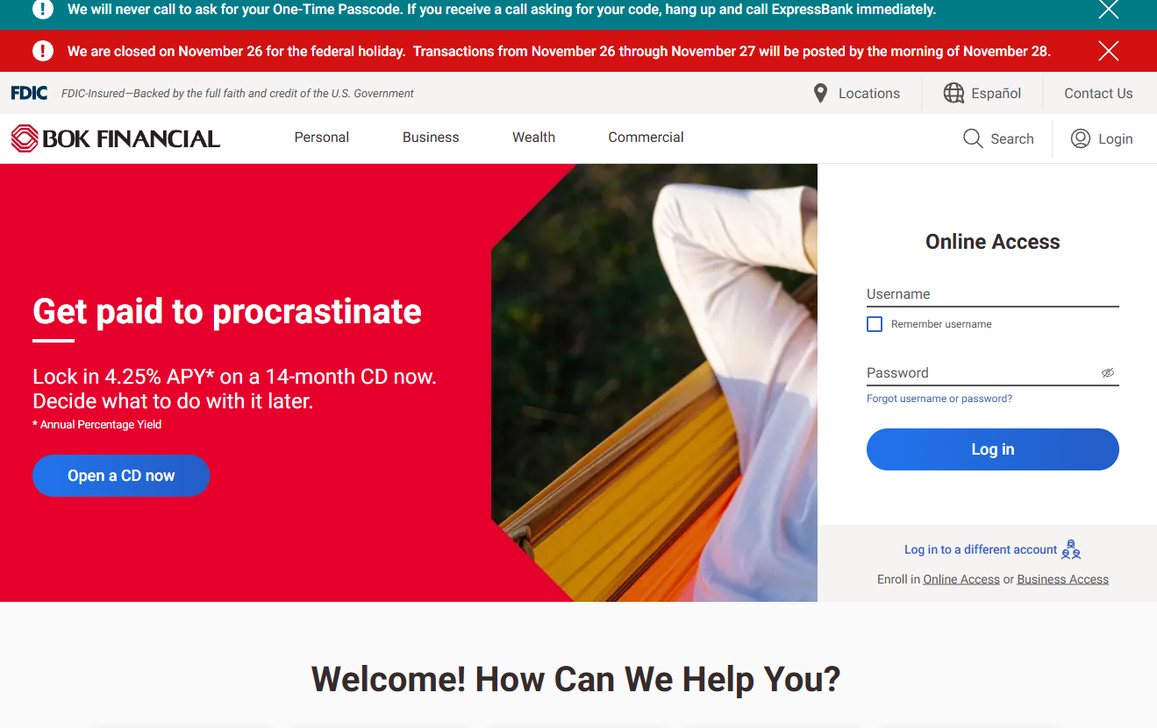
BOK Financial is a strong option for those who require professional financial management. They bridge the gap between everyday personal banking and sophisticated wealth management. Their scale allows them to offer a wide range of products, from simple checking to complex business solutions.
For the entrepreneur in Arkansas trying to scale a local business, BOK provides the institutional weight necessary to secure larger lines of credit. They offer the kind of commercial lending structures that growing companies need to thrive.
For the borrower looking to secure their future while managing current obligations, BOK provides a professional framework. They offer specialized services like CDs with competitive yields, which can be a great way to park money once your credit situation stabilizes.
This makes them a «ladder» lender. You might start with them for basic banking and eventually move into high-level investment and wealth management as your net worth grows over time.
Pros:- Wide range of services from personal to commercial banking.
- Offers high-yield options like CDs for savers.
- Strong institutional backing and security.
- May be less flexible for those with very low credit scores.
Common Pitfalls in the Arkansas Borrowing Market
Understanding the nuances of the lending market is the best way to protect your future. Many borrowers fall into the trap of «interest rate blindness.» This happens when you focus solely on the monthly payment amount rather than the Annual Percentage Rate (APR). A $50 monthly payment sounds manageable, but if that payment is for a loan that lasts three years due to an astronomical APR, you will end up paying back triple what you originally borrowed.
Always look at the total cost of the loan over its entire lifespan. It is the only way to see the true price of the money you are borrowing.
Another common mistake is the «lender shopping» error. While it is a good idea to compare rates, every time you submit a formal application, it can trigger a «hard» inquiry on your credit report. This can temporarily dip your score. To avoid this, look for lenders that offer «pre-qualification» using a «soft» pull. This allows you to see estimated rates and terms without any impact to your score.
Finally, be wary of predatory structures, such as payday loans that offer no transparency regarding terms or rollover fees. These are often designed to keep borrowers in a cycle of debt. You end up constantly paying interest but never actually touching the principal balance. If a lender’s primary method of communication is «immediate cash with no questions asked,» proceed with extreme caution.
How to Strengthen Your Credit Profile While Repaying Debt
If you are taking out a loan to solve a problem, use that opportunity to simultaneously fix the underlying issue: your credit score. A higher score doesn’t just mean better rates for your next car. It means lower insurance premiums, better terms on housing, and even more favorable conditions for employment background checks in certain sectors.
Here is a step-by-step approach to maximizing your financial recovery while managing a new loan:
- Automate Your Payments: Even a single 30-day late payment can tank a credit score by dozens of points. Set up autopay for at least the minimum amount due on all accounts to ensure you never miss a deadline.
- Target High-Interest Debt First: If you are using a loan for consolidation, prioritize paying off the debt with the highest interest rate first. This is the «Avalanche Method,» and it reduces the total amount of interest you pay over time.
- Maintain Low Credit Utilization: If you have credit cards, try to keep your balance below 30% of your limit. For example, if your limit is $1,000, try not to let the balance exceed $300. This is one of the fastest ways to boost your score.
- Request Credit Limit Increases: Once your score improves slightly, ask your current card issuers for a limit increase. As long as you don’t increase your spending, this lowers your utilization ratio and helps your score.
Navigating the Loan Process in Arkansas
When you are staring at a stack of bills, the temptation to sign anything is immense. However, jumping into a high-interest loan without reading the fine print is like walking into a storm without an umbrella. Always verify the total cost of borrowing, including any hidden fees that might sneak into the contract, such as origination fees or prepayment penalties.
A prepayment penalty is particularly dangerous because it charges you a fee for paying your loan off early. It essentially punishes you for being financially responsible and trying to get out of debt ahead of schedule.
One common mistake is ignoring the impact of the application process on your credit score. While some lenders offer «soft» pulls that don’t affect your rating, others perform «hard» inquiries. It is vital to know which one you are facing before you hit that submit button. If you are in the middle of applying for a mortgage, avoid any hard inquiries for at least six months to prevent score fluctuations.
Another pitfall is borrowing more than you can realistically repay. A loan should be a tool to solve a problem, not a weight that drags you down further. Always map out your monthly budget to ensure that the new payment won’t leave you struggling to buy groceries. A good rule of thumb is the 36% rule: your total debt payments should ideally not exceed 36% of your gross monthly income.
